In Their World
Before the Dive
Going underwater starts long before you roll off the boat.
It starts on top of the water. It starts before you even arrive at your destination. It starts when you decide whether you are prepared, whether your gear is right, whether your head is in the right place, and whether you understand that you are about to enter a world that does not belong to you.
That may sound obvious, but it is easy to forget. Especially when the water is clear, the camera is ready, and everybody is excited to get in. There is a strange thing that happens around the ocean. People arrive at the edge of it and immediately start thinking about what they want from it.
They want the experience.
They want the photo.
They want the story.
They want the proof that they were there.
The Ocean Does Not Care
That is not meant to sound harsh. It is just true.
Nothing underwater is impressed that you made it there. The turtle does not care how far you traveled. The reef does not care what camera you brought. The fish are not waiting around hoping to be part of your portfolio. Only your ego thinks any of that is cool.
If you live and work underwater, you become a steward of that world. Not because you get a badge, or a title, or some grand announcement. You become one because you understand that your presence has weight. Every kick, every hand placement, every decision, every moment of impatience matters.
That is the part people miss.
Being underwater is not only about getting down there. It is about how you behave once you are there..
What Responsibility Looks Like
A good diver can move through the water without turning the reef into a demolition site. A good photographer knows when to back off. A good guest understands that an animal resting, feeding, hiding, or simply existing is not a prop.
It does not owe you a better angle.
It does not owe you eye contact.
It does not owe you one more pass because the first frame was soft.
The ocean and its residents owe you nothing.
Neither do the reefs, the wrecks, the coral heads, the sand flats, the ledges, or the quiet places where life is doing what life does when we are not there. We are the interruption. Sometimes a careful one. Sometimes not.
That is where responsibility comes in.
How I Learned It
I did not learn this by reading a perfect little list of dive rules.
When I first arrived in Honduras, I showed up with a big fancy camera and very few dives. Around 100 dives, which at the time felt like something. I quickly learned it was just enough to get me into trouble.
On one of those early dives, I was pulled off a small piece of reef by a divemaster who was doing his job. Very well, I might add.
That moment stayed with me.
Not because I was embarrassed, although I probably should have been. It stayed with me because it was the first time I really understood that wanting to make underwater photographs was not enough. Carrying a camera underwater did not make me an underwater photographer. It made me a diver with a camera, and those are not the same thing.
From that dive on, my focus changed.
I worked on buoyancy. I worked on camera control. I worked on knowing where my fins were, where my body was, where my housing was, and what was around me before I even thought about pressing the shutter.
For many dives after that, I was not trying to be an underwater photographer.
I was learning how to belong there without doing damage.
That is still the standard. Practice what I preach. Or at least keep trying to.
The Shot Is Not the Point
For me, underwater photography has never been only about the picture. The picture matters, of course. That is the whole reason for carrying a camera into a place where cameras are a pain to carry. But the picture cannot be the only thing that matters. The second the shot becomes more important than the subject, something has gone sideways.
You see it quickly underwater. People chase animals. They crowd turtles. They pin creatures into holes with their lights. They kneel on coral because they are trying to get steady. They stir up the bottom, kick through soft growth, grab onto things they should not touch, and then come back to the boat talking about what an amazing dive it was.
Maybe it was amazing for them.
That does not mean it was harmless.
The ocean does not need us to improve it. Mostly, it needs us to stop bumping into things.
That line sounds simple, but it covers a lot. Control your buoyancy. Know where your fins are. Do not grab the reef. Do not chase wildlife. Do not make an animal work harder just so you can make an image easier. Do not confuse access with permission.
And do not assume that being underwater makes you part of the scene.
You are visiting.
Patience and Restraint
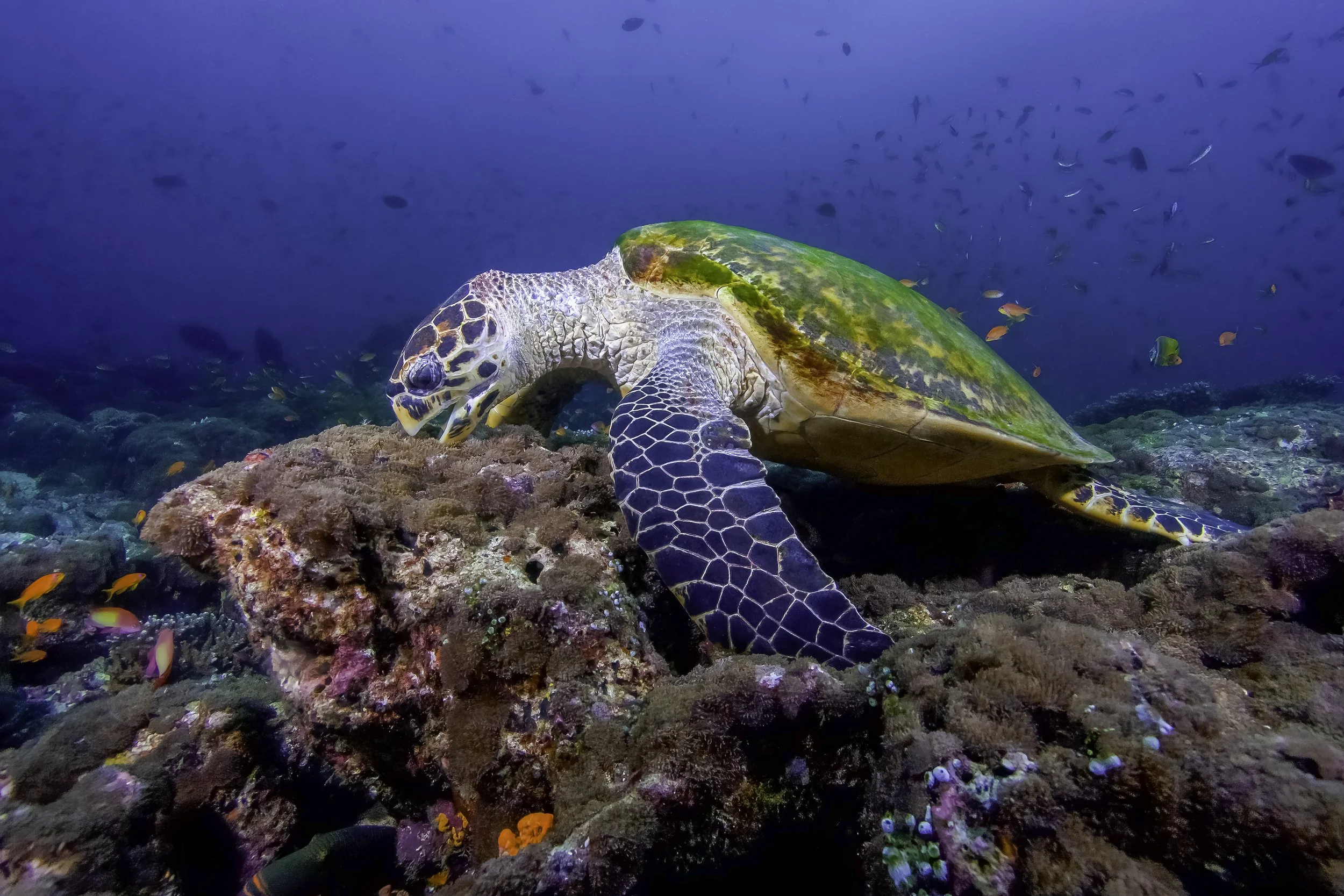
That is not a small thing. It is a privilege. Every descent is an opportunity to see something most people never will. A turtle moving slowly over the bottom. A fish holding position in the current. A coral head full of life that looks still until you stop long enough to really see it.
The longer you spend there, the more you understand that the best moments usually happen when you stop trying to force them.
Patience is underrated underwater.
So is restraint.
Some of my favorite encounters have come from doing less. Waiting. Settling in. Letting the animal decide what happens next. Sometimes it turns toward you. Sometimes it leaves. Sometimes the picture happens, and sometimes it does not.
That is part of the deal.
The Price of Being Unprepared
“The sea’s only gifts are harsh blows and, occasionally, the chance to feel strong”
The ocean does not ask if you are prepared to be there. It does not ask if you are calm, skilled, respectful, or paying attention. It does not ask if you know what you are doing. It simply allows you in, and then it shows you the truth pretty quickly.
If you are not prepared, you pay the price.
Sometimes the price is a bad dive. Sometimes it is damaged gear. Sometimes it is a missed photograph. Sometimes it is a scared animal, a broken piece of reef, or a situation that becomes dangerous because someone thought enthusiasm was the same thing as readiness.
Enthusiasm is not readiness.
This is also worth saying plainly: people die doing this. Diving is beautiful, but it is not casual. The ocean does not care how experienced you think you are, how expensive your gear is, or how badly you want the shot. Conditions change. People panic. Small mistakes stack up.
Respect underwater is not only about protecting the ocean. It is also about coming back from it.
Being comfortable underwater is earned. So is trust. So is the right to come back with images that actually mean something
Leave the Rest Alone
This is why responsibility begins before the dive.
It begins with respect for the place, the conditions, the animals, the people you are diving with, and your own limitations. It begins with understanding that the ocean is not a stage. It is not there for our entertainment. It is not waiting to be conquered, collected, or improved.
It is already complete.
Our job is simpler than we make it.
Enter carefully.
Pay attention.
Take only the picture that can be taken without harm.
Leave the rest alone.
That is the responsibility of being in their world.
Beauty Below Notes
Beauty Below is built from years spent underwater, but these stories are not here to make the ocean seem more interesting than it already is. It does not need the help. They are here to share what was seen, what was learned, and why it still matters to look carefully.
